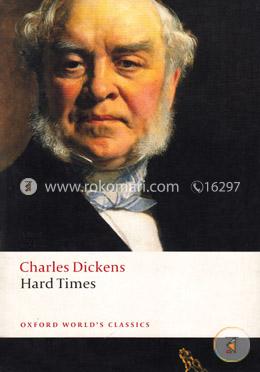
ONE of the memorable moments of Hard Times occurs early in Book 1, in chapter iii, when Mr Gradgrind, walking past Sleary's circus booth, discovers his children Louisa and Tom outside, striv- ing to peep in. Thomas Gradgrind, the hard-headed social theorist, is astonished by this act of disobedience, as well he might be, for it represents a direct challenge to the very principles upon which his system is based. His children have literally and metaphorically found 'a loophole'. Sullen, emotionally stunted, and inarticulate, they still evince an instinctive awareness that life holds 'hidden glories' not catered for by their father's blinkered ideas. Typically of Dickens, and of particular thematic import for Hard Times, the scene is conceived in a vividly theatrical manner: the characters are posed in a visually realized picture, or tableau; their differing outlooks generate dramatic conflict between them; and the representative nature of these viewpoints embodies general issues in a concentrated dramatic moment, according to the most venerable traditions of stagecraft. The scene involves three of the principal actors in the story, and points forward not only to the central crisis of
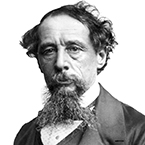
Charles John Huffam Dickens (চার্লস ডিকেন্স , 7 February 1812 – 9 June 1870) was an English writer and social critic. He created some of the world's best-known fictional characters and is regarded as the greatest novelist of the Victorian era. His works enjoyed unprecedented popularity during his lifetime, and by the twentieth century critics and scholars had recognised him as a literary genius. His novels and short stories enjoy lasting popularity. Dickens was regarded as the literary colossus of his age.[9] His 1843 novella, A Christmas Carol, remains popular and continues to inspire adaptations in every artistic genre. Oliver Twist and Great Expectations are also frequently adapted, and, like many of his novels, evoke images of early Victorian London. His 1859 novel, A Tale of Two Cities, set in London and Paris, is his best-known work of historical fiction. Dickens's creative genius has been praised by fellow writers—from Leo Tolstoy to George Orwell and G. K. Chesterton—for its realism, comedy, prose style, unique characterisations, and social criticism. On the other hand, Oscar Wilde, Henry James, and Virginia Woolf complained of a lack of psychological depth, loose writing, and a vein of saccharine sentimentalism. The term Dickensian is used to describe something that is reminiscent of Dickens and his writings, such as poor social conditions or comically repulsive characters.


 Hello, Sign in
 Cart
Cart