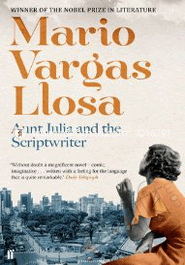
Aunt Julia And The writer is a story of an 18-year old aspiring writer and his affair with a 32-year old divorcee. The story is drawn from the life of the author and includes real life instances that are mixed with fictitious accounts.
Mario is a young man living in Lima, Peru and working in a Panamericana radio station as a news bulletin writer. During his stay in the city with his aunt, he meets her sister, Julia, who has recently ended her marriage. After initial hiccups, the two become good friends and even move on to become romantically involved with one another. In parallel to the budding romance, readers are also familiarised with a Bolivian writer named Pedro who is hired by the same radio station that Mario works in, to write serials. As the relationship between Mario and Julia gains momentum and complexity, the rise and fall of Pedro reveals the artistic environment of the era.
Aunt Julia And The writer is an engrossing tale of unconventional romances, the artistic process and the life of an ordinary person during the 50’s in Peru. The book has been published by Faber in 2012 and is available in paperback.
Key Features:
The novel has been adapted into a Hollywood feature film called Tune In Tomorrow.
Title
Aunt Julia and The Script Writer (Nobel Prize Winner's)
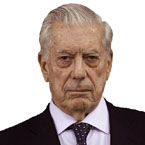
Jorge Mario Pedro Vargas Llosa, 1st Marquis of Vargas Llosa (born March 28, 1936), more commonly known as Mario Vargas Llosa, is a Peruvian writer, politician, journalist, essayist, college professor, and recipient of the 2010 Nobel Prize in Literature. Vargas Llosa is one of Latin America's most significant novelists and essayists, and one of the leading writers of his generation. Some critics consider him to have had a larger international impact and worldwide audience than any other writer of the Latin American Boom. Upon announcing the 2010 Nobel Prize in Literature, the Swedish Academy said it had been given to Vargas Llosa "for his cartography of structures of power and his trenchant images of the individual's resistance, revolt, and defeat". Vargas Llosa rose to fame in the 1960s with novels such as The Time of the Hero (La ciudad y los perros, literally The City and the Dogs, 1963/1966), The Green House (La casa verde, 1965/1968), and the monumental Conversation in the Cathedral (Conversación en la catedral, 1969/1975). He writes prolifically across an array of literary genres, including literary criticism and journalism. His novels include comedies, murder mysteries, historical novels, and political thrillers. Several, such as Captain Pantoja and the Special Service (1973/1978) and Aunt Julia and the Scriptwriter (1977/1982), have been adapted as feature films.


 Hello, Sign in
 Cart
Cart