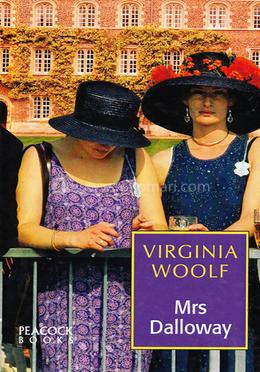
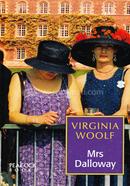
Virginia Woolf’s fourth novel, Mrs Dalloway, marks an important stage in her development as a writer. In this novel she finally departs from the form of the traditional English novel, establishing herself as a writer of genius. Her stream of consciousness style, in a lyrical and haunting language, made this novel, from its publication in 1925, one of her most popular novels. The action is restricted to the events of one day in central London, where Clarissa Dalloway, the wife of Richard Dalloway M.P. and a fashionable London hostess, is to give an important party. Her character is gradually revealed through her thoughts on that day and through her memories of the past, rendered by interior monologue and stream of consciousness. So are the other people who have touched her life: her one-time suitor Peter Walsh, lately returned from India after five years’ absence, her childhood friend Sally Seton, her daughter Elizabeth and spinster tutor Miss Kilman, a political hostess, Lady Bruton. A complementary character is Septimus Waren Smith, a shell-shock victim who has retreated into a private world and ends the day by committing suicide. Through her thoughts on that day and through her memories of the past, her character is gradually revealed. And so are the other personalities who have touched on her life. Their loves and hates, their tragedies and comedies, all are vividly, intimately – and uniquely – brought to life.
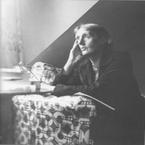
Virginia Woolf is now recognized as a major twentieth-century author, a great novelist and essayist and a key figure in literary history as a feminist and a modernist. Born in 1882, she was the daughter of the editor and critic Leslie Stephen, and suffered a traumatic adolescence after the deaths of her mother, in 1895, and her step-sister Stella, in 1897, leaving her subject to breakdowns for the rest of her life. Her father died in 1904 and two years later her favourite brother Thoby died suddenly of typhoid. With her sister, the painter Vanessa Bell, she was drawn into the company of writers and artists such as Lytton Strachey and Roger Fry, later known as the Bloomsbury Group. Among them she met Leonard Woolf, whom she married in 1912, and together they founded the Hogarth Press in 1917, which was to publish the work of T. S. Eliot, E. M. Forster and Katherine Mansfield as well as the earliest translations of Freud. Woolf lived an energetic life among friends and family, reviewing and writing, and dividing her time between London and the Sussex Downs. In 1941, fearing another attack of mental illness, she drowned herself. Her first novel, The Voyage Out, appeared in 1915, and she then worked through the transitional Night and Day (1919) to the highly experimental and impressionistic Jacob's Room (1922). From then on her fiction became a series of brilliant and extraordinarily varied experiments, each one searching for a fresh way of presenting the relationship between individual lives and the forces of society and history. She was particularly concerned with women's experience, not only in her novels but also in her essays and her two books of feminist polemic, A Room of One's Own (1929) and Three Guineas (1938). Her major novels include Mrs Dalloway (1925), the historical fantasy Orlando (1928), written for Vita Sackville-West, the extraordinarily poetic vision of The Waves (1931), the family saga of The Years (1937), and Between the Acts (1941). All these are published by Penguin, as are her Diaries, Volumes I-V, and selections from her essays and short stories.


 Hello, Sign in
 Cart
Cart